

A new Ethereum URL format that cannot be blocked on the internet!
A new URL format has been introduced on the Ethereum network that cannot be blocked and works on decentralised technology.
 blockchain
New Delhi, UPDATED: Apr 19, 2023 17:54 IST
Highlights
- New URL format that cannot be blocked
- The ecosystem still uses centralised web servers
- Also interacts with content on Ethereum blockchain
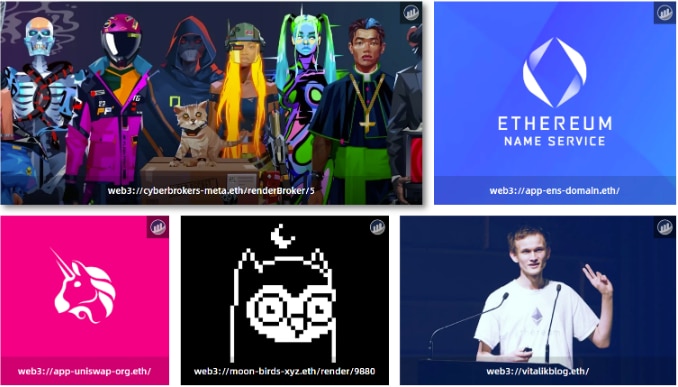
With the introduction of ERC-4804, Web3 URLs have been made available on Ethereum, enabling users to access Ethereum apps and nonfungible tokens (NFTs) without being concerned about centralised censorship.
On February 14, 2022, the new Ethereum standard, named "Web3 URL to EVM Call Message Translation," was first put forth. It was co-authored by Qi Zhou, the creator of ETHStorage, Sam Wilson, and Chao Pi.
advertisement
In order to directly access on-chain Web3 content, such as decentralised applications (DApps) front ends and NFTs, the plan was defined as a "HTTP-style" URL. ERC-4804 was authorised and published on the mainnet on March 1 more than a year later.
According to Anthurine Xiang, a representative for the layer-2 storage protocol ETHStorage, the ecosystem frequently still uses centralised web servers to access "decentralised" applications.
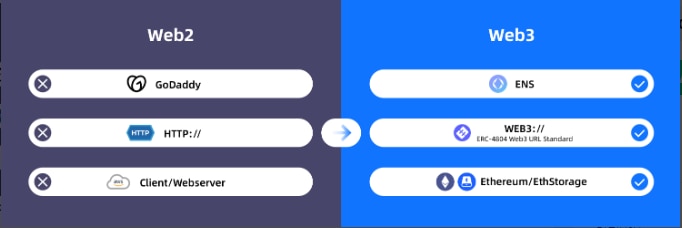
Uniswap and other DApps currently make the claim to be decentralised applications, according to Xiang, who continued, "But how [do] we get on the webpage? You must utilise the DNS. You need to work with GoDaddy. They are all centralised computers.
advertisement
The majority of users now use HTTP, or "Hypertext Transfer Protocol," to reach the internet.
The computer uses HTTP to ask another computer to retrieve the requested information, such as a website or images, when a user clicks a link or types in a website URL on the internet.
Internet users who use ERC-4804 have the option to immediately access DApps like Uniswap or on-chain NFTs by typing "web3://" (as opposed to "http://") in their browsers. This is due to the standard's ability to enable direct querying of the Ethereum Virtual Machine by users. (EVM).
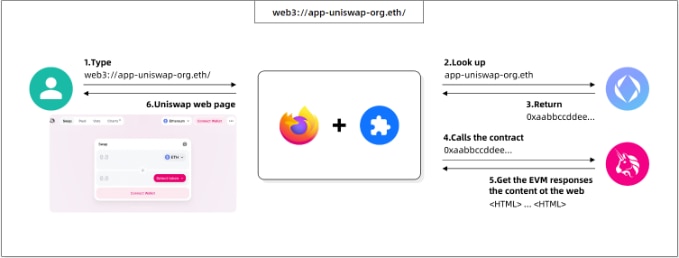
If the content of the website is stored on the Ethereum blockchain or a compatible layer-2 protocol, then it is potentially possible to access the entire website using these methods. Qi Zhou, the creator of ETHStorage, claims that the expenses of doing this are still very high.
In a recent presentation at ETHDenver, Zhou stated, "The critical issue here is that the cost of storage on Ethereum is super, super expensive on mainnet."
advertisement
"One gigabyte of on-chain data, for instance, will cost about $10 million. [...] Zhou continued, "That is unacceptable for many Web2 applications and even many NFTs. Layer-2 storage solutions might help offset some of the expenses.
Xiang suggested that the new URL standard only makes sense for particular uses given the costs.
“Not everything needs to go decentralized. If you are running a pretty good Web2 business and you don’t have to worry too much about centralized censorship. [...] You can just go for that.”
However, the new standard would be helpful for DApps or websites that are at danger of being blocked, like Tornado Cash. Because of restrictions, many people cannot access Tornado Cash through their website, for instance, according to Xiang.
When asked if bad actors could use the new standard to engage in illegal behavior, Xiang responded:
“This is really hard to say just like how Bitcoin was founded. I think Bitcoin was not born for evil, but still, in the beginning, people [were] doing shady things like the Silk Road, they had been using Bitcoin.”
advertisement
As with Bitcoin, according to Xiang, they are merely providing people with a decentralised choice that they might not otherwise have.
Although it is not the first approach to decentralised web hosting, the new Ethereum standard is the first of its kind for the blockchain, according to Xiang.
A network designed to provide what centralised cloud servers presently do through decentralised methods is the InterPlanetary File System (IPFS). An IPFS URL, on the other hand, can only link to static material; this content cannot be modified or altered, according to Xiang.
According to Xiang, ERC-4804 will support "dynamic data," such as enabling users to engage with website content by leaving likes and comments. The standard is anticipated to engage with other blockchains much more easily because it is native to Ethereum, according to Xiang.
Published on: Mar 31, 2023 13:20 ISTPosted by: cyrus john, Mar 31, 2023 13:20 IST
COMMENTS 0