
Supreme Court partners with IIT Madras to pave the way for AI & tech advancements
India's Supreme Court partners with IIT Madras to leverage AI and tech, transforming accessibility, efficiency, and upholding rights in the legal sphere
Highlights
- The Supreme Court of India's collaboration with IIT Madras is set to revolutionise the legal landscape through AI
- The MoU's primary objective is to usher in a digital transformation for the Indian judiciary
- CJI DY Chandrachud, played a pivotal role in this collaboration
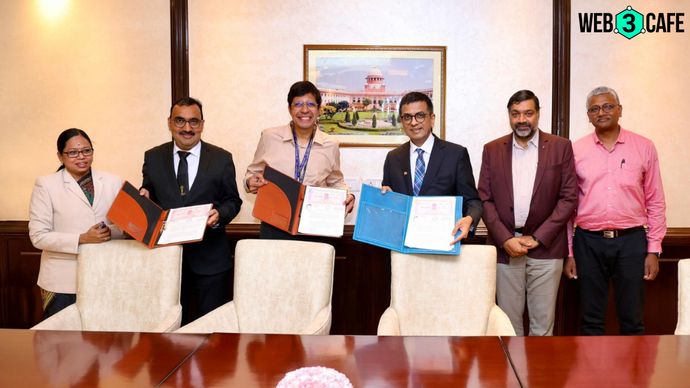
In a groundbreaking move, the Supreme Court of India has signed a Memorandum of Understanding (MoU) with the Indian Institute of Technology Madras (IIT Madras) to harness the power of Artificial Intelligence (AI) and emerging technologies. This collaboration is set to reshape the legal landscape, offering numerous technological solutions that promise to enhance accessibility and efficiency within the legal domain.
The MoU was forged to facilitate the digital transformation of the Indian judiciary, aligning it with a vision for a more technologically advanced legal ecosystem. This transformation aims to significantly improve access to justice, making legal proceedings more efficient and accessible to all.
CJI Chandrachud's forward-thinking perspective
The catalyst for this collaboration came from the visit of Chief Justice of India, DY Chandrachud, to IIT Madras in July this year. CJI Chandrachud is a staunch advocate for integrating technology into the legal system. During his visit, he emphasised the pivotal role of AI in advancing the legal sector while stressing the importance of using technology to uphold individual freedoms and human rights.
AI's dual potential
CJI Chandrachud noted that while AI holds immense potential, it can also be used to perpetuate discrimination and unfair treatment. He highlighted the fact that technology can either constrain or empower us. In his view, the true purpose of technology lies in securing the freedoms and rights of every individual. By embracing technology, the legal system can become more resilient in the face of emerging challenges and threats to individual freedoms.
Embracing technology as a necessity
CJI Chandrachud has stated that technology is not merely an option but a necessity in today's legal system. This collaboration with IIT Madras is a significant step in ensuring that technology plays a pivotal role in making the legal domain more efficient, accessible, and capable of safeguarding the rights and liberties of every citizen.
The future of India's judiciary is set to be driven by technology, and this partnership with IIT Madras marks a pivotal moment in this transformative journey.


